We purchased our home a little over two years ago, and from the beginning, I knew the backyard had potential.
There’s a mature orange tree back there that was clearly thriving long before we ever arrived, but surrounding it were five large shrubs. They looked nice enough, but they felt like wasted space—especially when I’m trying to be more intentional about how we use our land. I want our backyard to do something. I want it to grow food. I want it to be useful.
Over time, a plan started forming. I’d love to replace those shrubs with producers: a lemon tree, a grapefruit tree, a peach tree, maybe a plum or jujube, and a lime tree. If it can feed us, it gets priority.
So when a new plant nursery opened in town, of course I stopped in “just to look.”
That didn’t last long.
After wandering through all the options, my daughter fell in love with a mandarin orange tree. I’m pretty sure it was because it had one adorable little mandarin hanging off of it, ready to be eaten. Honestly, fair. Into the cart it went. I also picked out a Mexican lime tree, fully expecting both of them to sit in their nursery pots for a while. We hadn’t removed any shrubs yet, and planting felt like a future project.
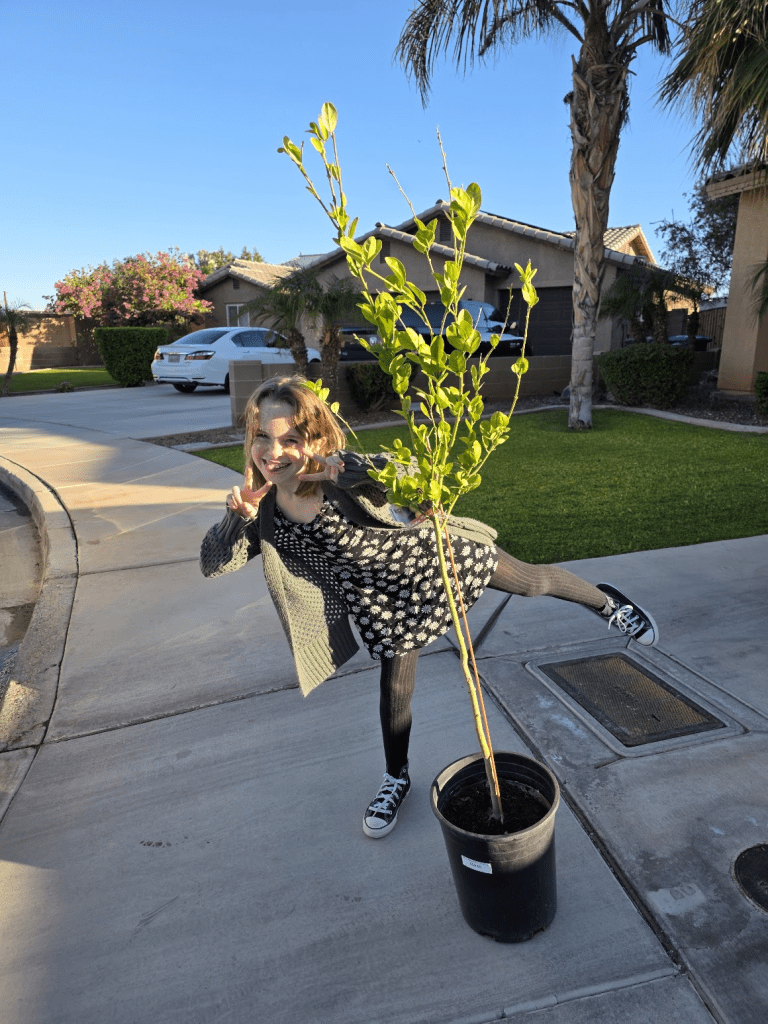
But when we got home, my husband surprised me by grabbing a shovel and starting to dig.
That shrub did not want to leave.
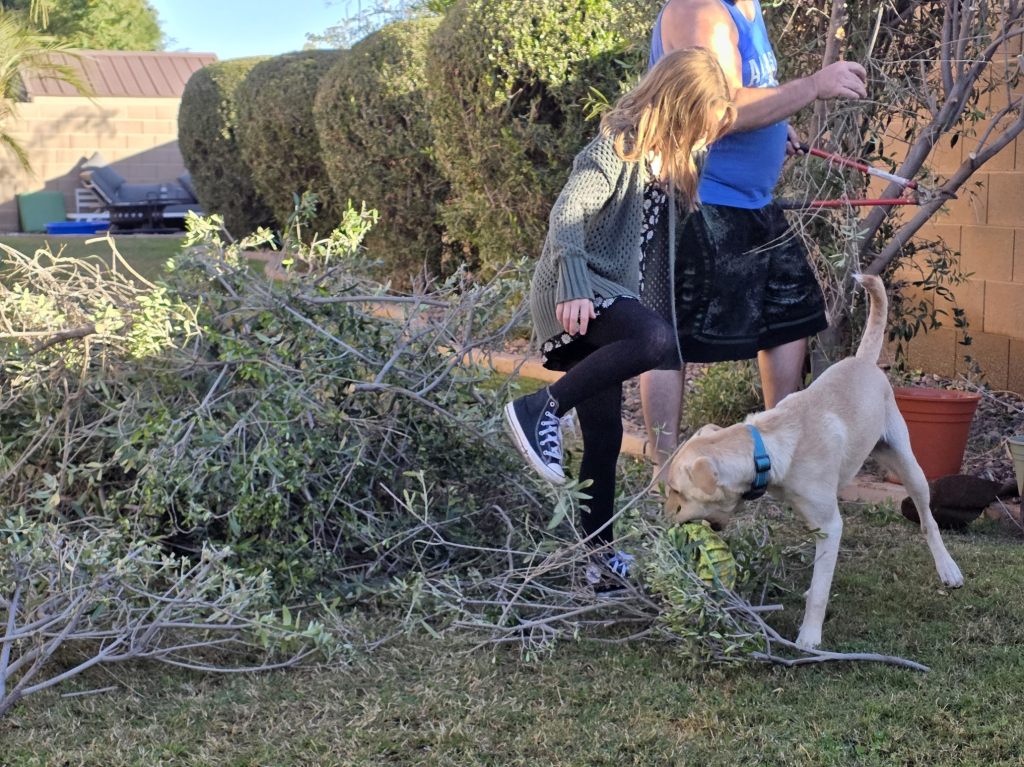
My husband and oldest daughter worked on it for hours. The roots were deep. They were thick. They were stubborn. But eventually, after a lot of effort and teamwork, it came out. Suddenly, we had space.
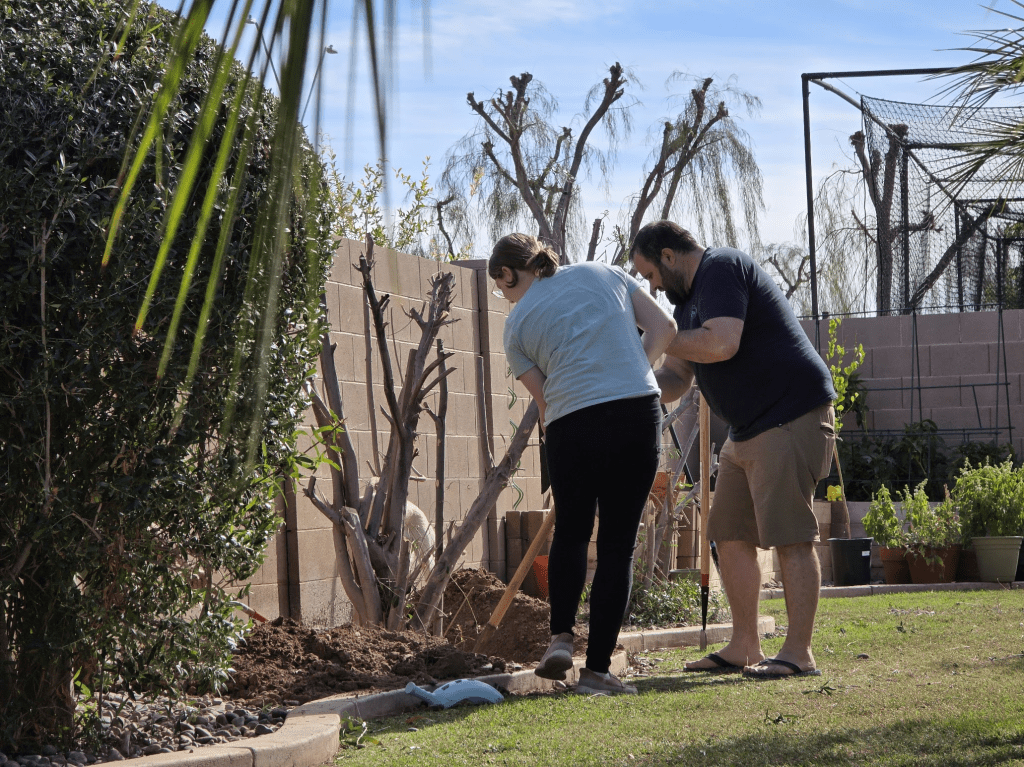
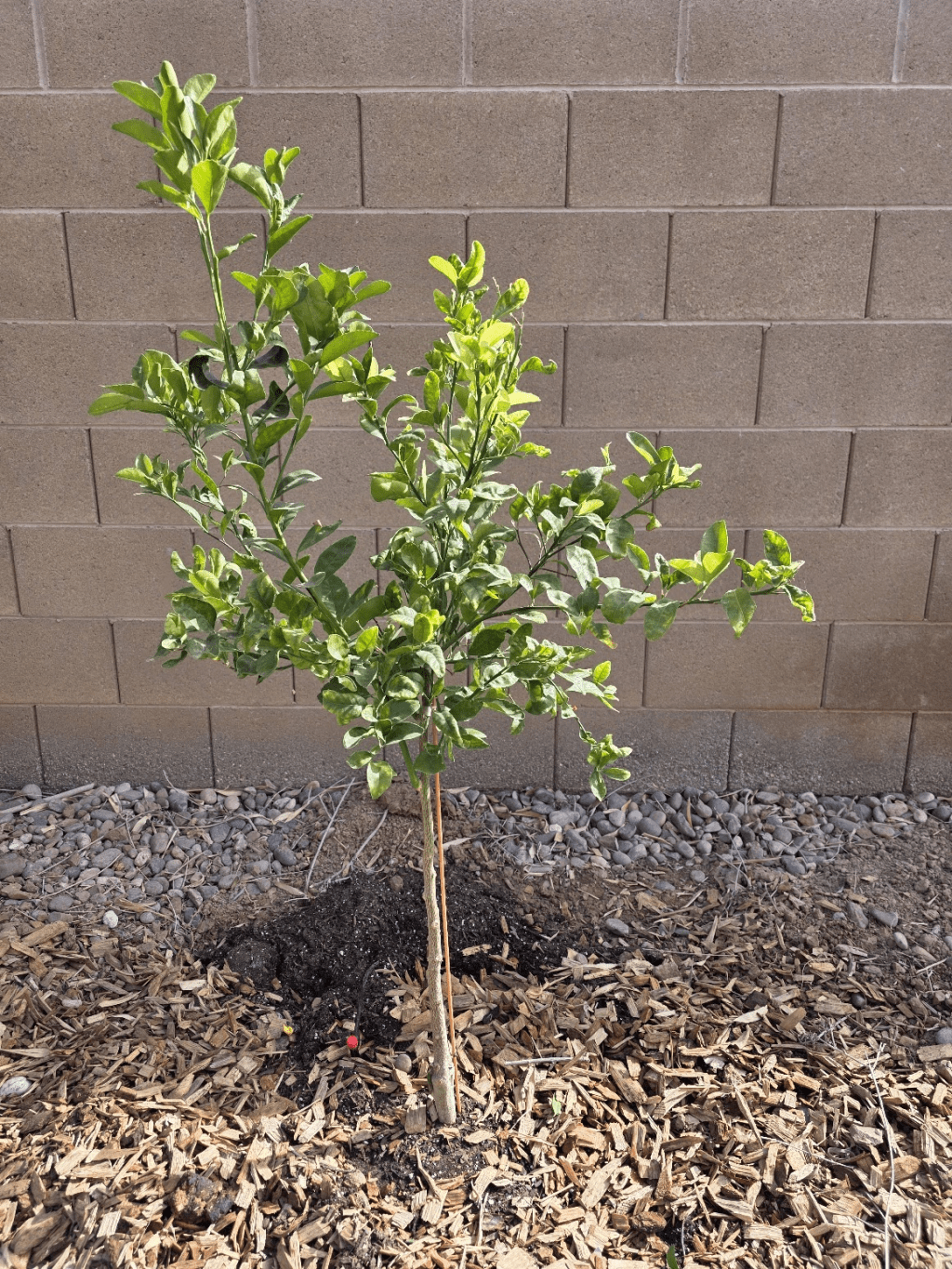
We decided to plant the mandarin first—a Tango mandarin—so of course his name is Tango.
We widened the hole, added citrus and palm soil, carefully cut open the nursery pot, and placed Tango into his new home. When planting citrus, it’s important not to plant too deep. The top of the root ball should sit slightly above the surrounding soil so the roots can breathe properly. Planting too deep can stress the tree and lead to long-term issues. We backfilled with a mix of citrus soil and native soil, then mulched over the top, making sure the mulch didn’t touch the trunk. Keeping mulch away from the trunk helps prevent rot and pest problems, even though it’s tempting to pile it right up.
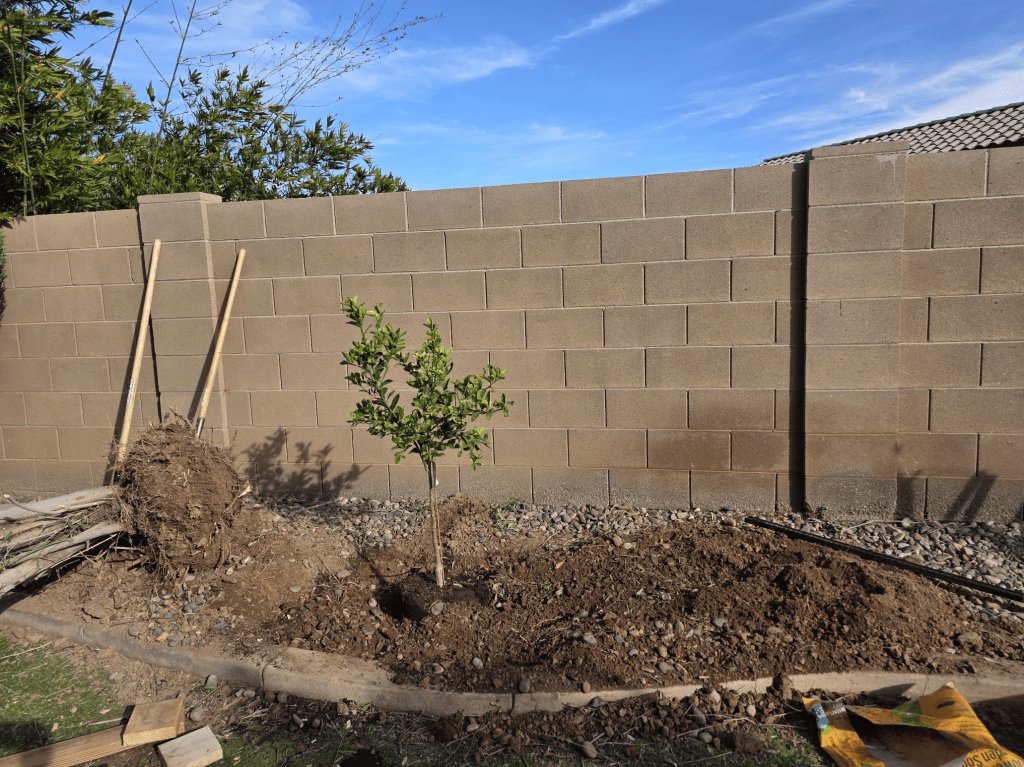
The shrubs already had 1/4” drip lines running to them, so I added emitters and called it good.
Then I did what all gardeners do at this stage: I hoped. And I checked on him every day.
A few days later, I started noticing yellowing. Veining. That unmistakable look that makes your stomach drop a little when you’ve just planted something new. My brain immediately jumped to the worst conclusion: I’d already killed it.
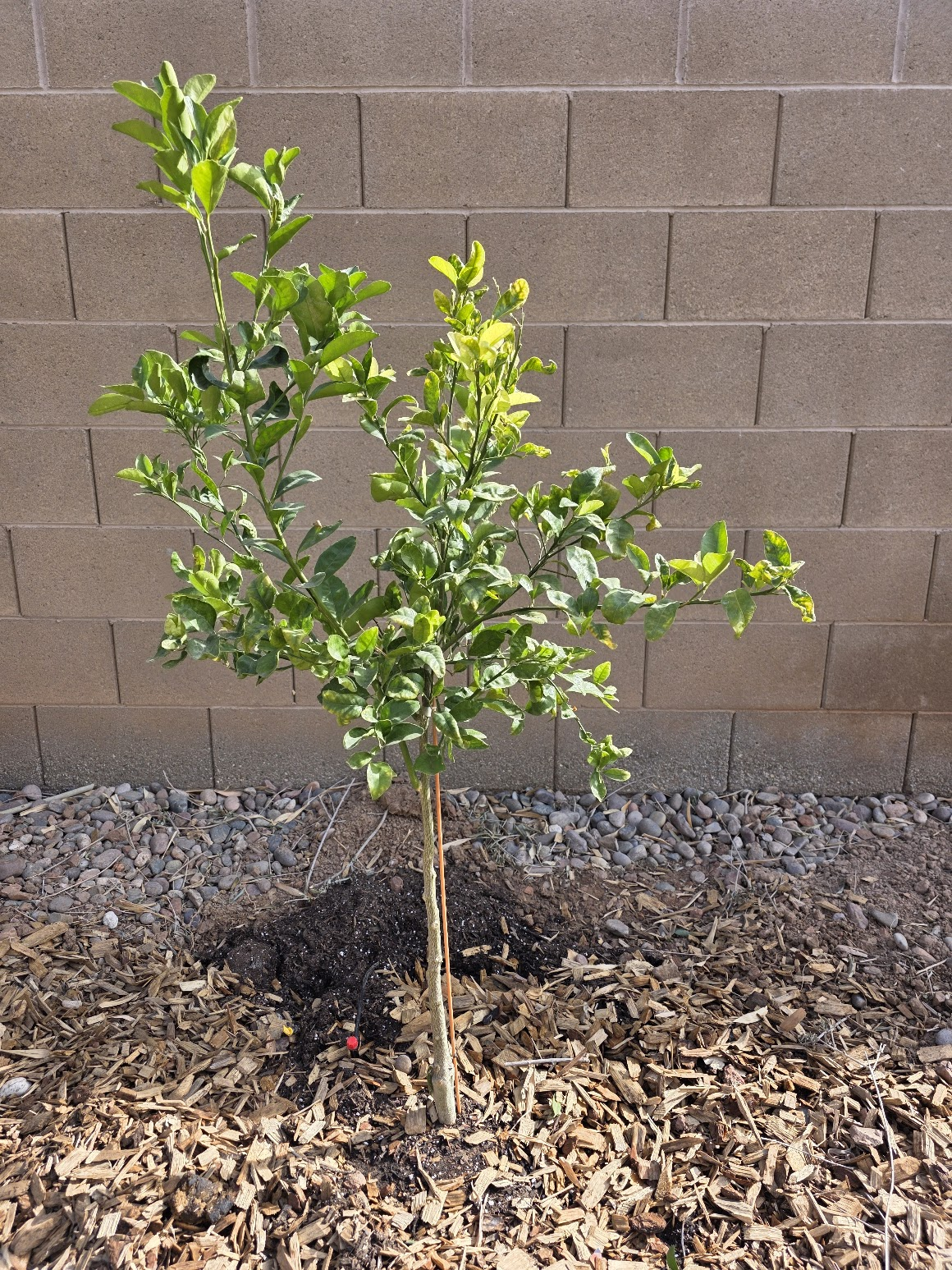
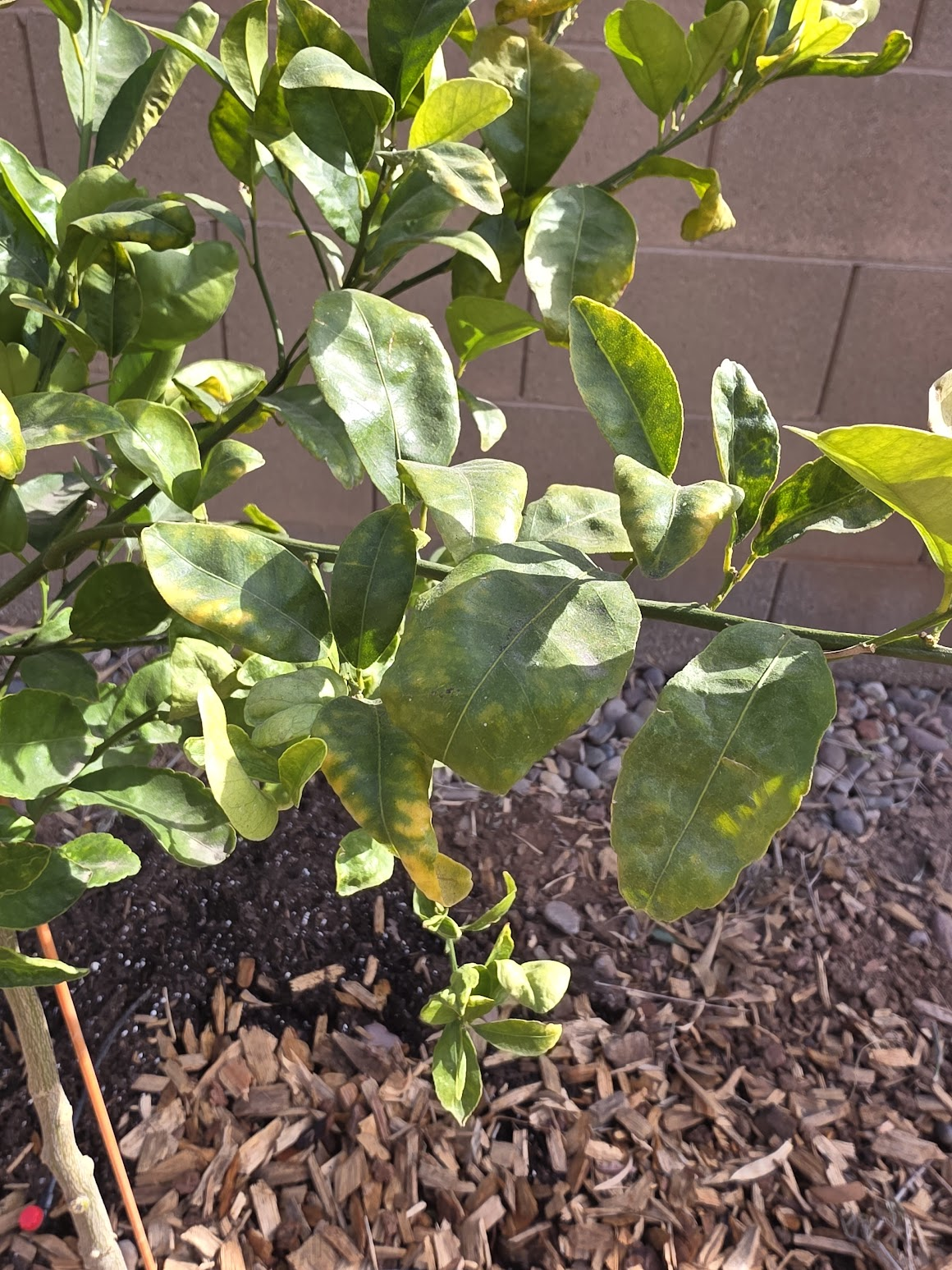
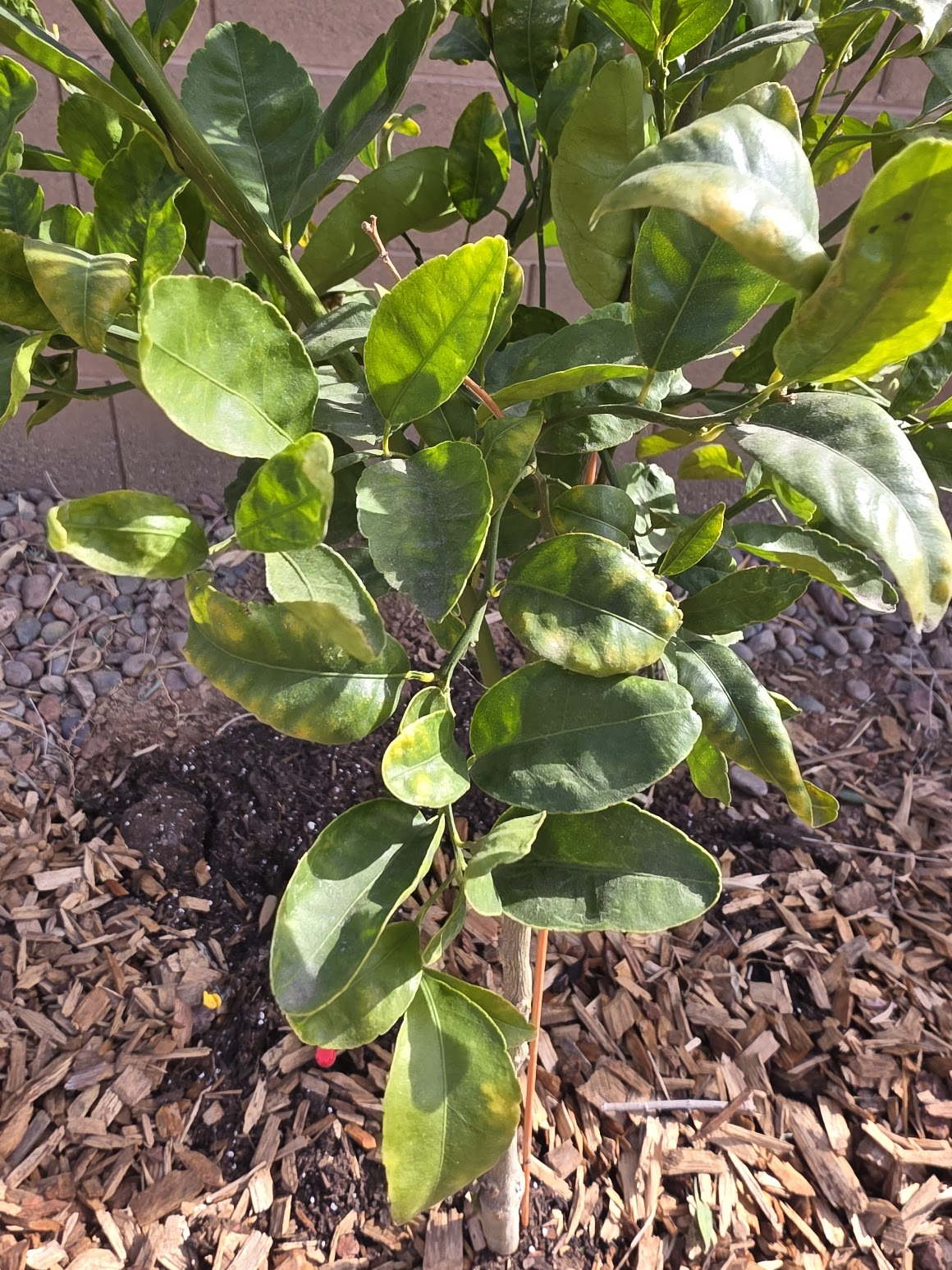
But when I slowed down and really looked at the tree, it didn’t seem quite as dire as it felt. There was no major leaf drop, no wilting, no dead branches. Some new growth was still there. Tango wasn’t dying—he was stressed.
After some digging (both literal and mental), it became clear what was going on. This was a mix of transplant shock, shallow watering from the drip system, and good old desert soil making nutrients—especially iron—harder for the tree to access. Newly planted citrus goes through this all the time, especially when the original nursery root ball doesn’t get deeply soaked.
Instead of fertilizing or panicking, I did one simple thing. I hand-watered.
I put the hose on a slow trickle right at the base of the tree and let it soak for about fifteen minutes. When I checked the soil afterward, it was genuinely wet several inches down. That was the moment I felt the panic ease a bit. The tree could recover.
I added another drip emitter so Tango would get more water during regular irrigation cycles, and I shifted my mindset from frequent watering to deep, intentional soaking. For the next few weeks, I’ll hand-water occasionally to help the original root ball fully transition. I’m also planning an iron soil drench to help with the yellowing caused by high-pH desert soil. What I’m not doing is fertilizing yet, digging it up again, or throwing too many fixes at it at once. When a plant is stressed, less is often more.
One of the most important lessons in all of this has been understanding what recovery actually looks like. Old yellow leaves may never turn green again. Some might drop. That’s okay. Success isn’t measured by fixing what’s already stressed—it’s measured by new growth coming in healthier.
The lime tree is still hanging out happily in its nursery pot for now, waiting patiently while we build up the energy (and courage) to dig out another shrub. And Tango? He’s settling in.
This whole experience is a good reminder of why I wanted Coop & Crop to exist in the first place. Not to show perfect gardens, but to share the real moments—the worry, the learning, and the quiet wins. Not everything that looks wrong is broken. Sometimes it just needs better conditions and a little patience.
I’ll share an update in a few weeks once we see how Tango responds 🌱🍊


 Coop & Crop
Leave a comment